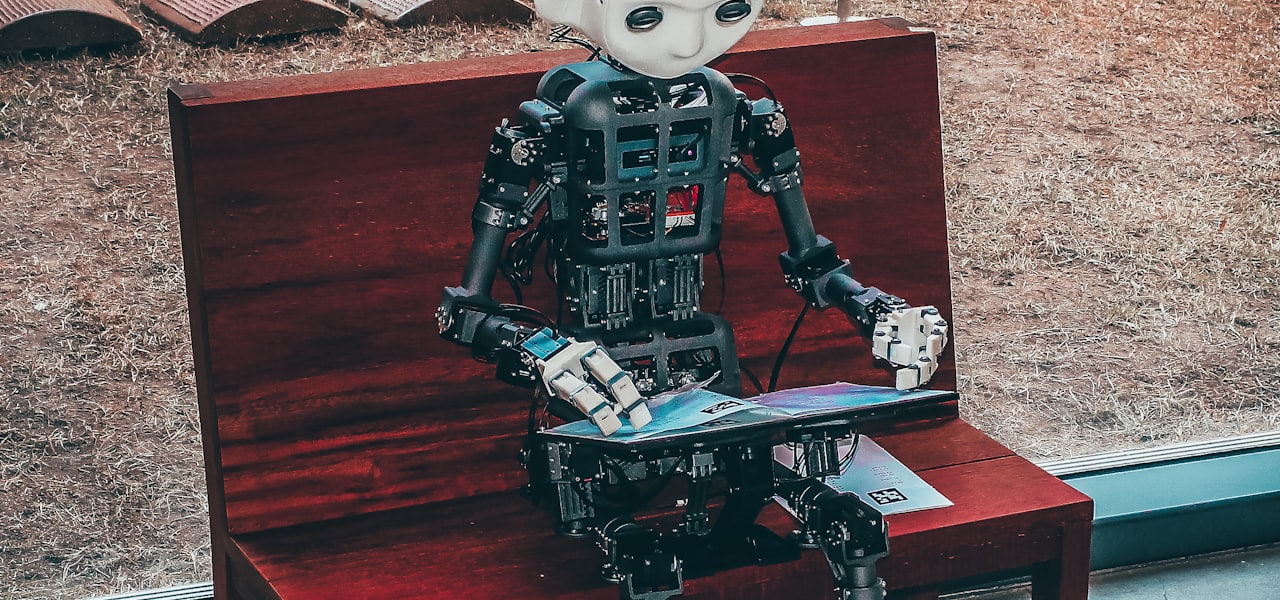
Corpus of Linguistic Acceptability (CoLA) is a dataset the primary purpose of which is to serve as a benchmark for evaluating the ability of artificial neural networks, including large language models, to judge the grammatical correctness of sentences. It consists of 10,657 English sentences from published linguistics literature that were manually labeled either as grammatical or ungrammatical. == Public version == The publicly available version of CoLA contains 9,594 sentences that belong to training and development sets. It excludes 1,063 sentences reserved for a held-out test set.
Eaze
Eaze is an American company based in San Francisco, California that launched a medical cannabis delivery app of the same name in 2014. == History == Eaze was launched in 2014 by Keith McCarty to deliver medical marijuana to patients in California. McCarty started the company in his San Francisco apartment with four employees. The company provides a mobile app to connect users with cannabis dispensaries, but does not grow or sell marijuana itself, and has been nicknamed “the Uber of Weed”. As of 2017, the company operates in more than 100 cities within California. In 2017, Eaze reported 300 percent growth over the previous year. It has 81 employees, and performs 120,000 deliveries per month to 250,000 users. A survey of Eaze users revealed that 66% are male, 57% are between 22 and 34, just over half have a bachelor's degree, and 49% have an annual income over $75,000. The company's vaporizer cartridge sales reached $1 million in sales in 4 months, and 31% of customers had ordered a vaporizer by the end of 2016. In 2016, Eaze founder Keith McCarty stepped down from his position as CEO and was replaced by Jim Patterson, who served as the company's chief product and technology officer. == EazeMD == EazeMD is a service that helps people acquire a medical marijuana card. It is a California-based telemedicine service in which physicians assess patients through an online video chat. It is California's largest telemedicine service for marijuana referrals. In June 2017, a former employee of one of these physicians accessed patient data in the physician's records system, causing a security breach. However, there was no evidence that Eaze data was accessed. == Eaze Insights == Eaze Insights conducts surveys of their users and compiles data into reports on cannabis use. Statistics from their reports have been cited in Seattle Weekly, Forbes, The Huffington Post, Business Insider, Fortune, and other general interest publications. == Financing == The company announced its $10 million Series A funding in April 2015 by multiple venture capital firms, including the Snoop Dogg-backed Casa Verde Capital. In October 2016, Eaze announced its series B funding in the amount of $13 million from five investors, making the company "the highest-funded startup in the history of the cannabis industry, as well as its fastest-growing one". In September 2017, the company raised another $27 million in venture funding. The Series B funding was led by Bailey Capital, joined by DCM Ventures, Kaya Ventures, and FJ Labs. According to the company' officials in 2017, Eaze managed to raise more than $52 million since its inception in 2014.
Business intelligence
Business intelligence (BI) consists of strategies, methodologies, and technologies used by enterprises for data analysis and management of business information to inform business strategies and business operations. Common functions of BI technologies include reporting, online analytical processing, analytics, dashboard development, data mining, process mining, complex event processing, business performance management, benchmarking, text mining, predictive analytics, and prescriptive analytics. BI tools can handle large amounts of structured and sometimes unstructured data to help organizations identify, develop, and otherwise create new strategic business opportunities. They aim to allow for the easy interpretation of these big data. Identifying new opportunities and implementing an effective strategy based on insights is assumed to potentially provide businesses with a competitive market advantage and long-term stability, and help them take strategic decisions. Business intelligence can be used by enterprises to support a wide range of business decisions ranging from operational to strategic. Basic operating decisions include product positioning or pricing. Strategic business decisions involve priorities, goals, and directions at the broadest level. In all cases, business intelligence is considered most effective when it combines data from the market in which a company operates (external data) with data from internal company sources, such as financial and operational information. When integrated, external and internal data provide a comprehensive view that creates ‘intelligence’ not possible from any single data source alone. Among their many uses, business intelligence tools empower organizations to gain insight into new markets, to assess demand and suitability of products and services for different market segments, and to gauge the impact of marketing efforts. BI applications use data gathered from a data warehouse (DW) or from a data mart, and the concepts of BI and DW combine as "BI/DW" or as "BIDW". A data warehouse contains a copy of analytical data that facilitates decision support. == History == The earliest known use of the term business intelligence is in Richard Millar Devens' Cyclopædia of Commercial and Business Anecdotes (1865). Devens used the term to describe how the banker Sir Henry Furnese gained profit by receiving and acting upon information about his environment, prior to his competitors: Throughout Holland, Flanders, France, and Germany, he maintained a complete and perfect train of business intelligence. The news of the many battles fought was thus received first by him, and the fall of Namur added to his profits, owing to his early receipt of the news. The ability to collect and react accordingly based on the information retrieved, Devens says, is central to business intelligence. When Hans Peter Luhn, a researcher at IBM, used the term business intelligence in an article published in 1958, he employed the Webster's Dictionary definition of intelligence: "the ability to apprehend the interrelationships of presented facts in such a way as to guide action towards a desired goal." In 1989, Howard Dresner (later a Gartner analyst) proposed business intelligence as an umbrella term to describe "concepts and methods to improve business decision making by using fact-based support systems." It was not until the late 1990s that this usage was widespread. == Definition == According to Solomon Negash and Paul Gray, business intelligence (BI) can be defined as systems that combine: Data gathering Data storage Knowledge management with analysis to evaluate complex corporate and competitive information for presentation to planners and decision makers, with the objective of improving the timeliness and the quality of the input to the decision process." According to Forrester Research, business intelligence is "a set of methodologies, processes, architectures, and technologies that transform raw data into meaningful and useful information used to enable more effective strategic, tactical, and operational insights and decision-making." Under this definition, business intelligence encompasses information management (data integration, data quality, data warehousing, master-data management, text- and content-analytics, et al.). Therefore, Forrester refers to data preparation and data usage as two separate but closely linked segments of the business-intelligence architectural stack. Some elements of business intelligence are: Multidimensional aggregation and allocation Denormalization, tagging, and standardization Realtime reporting with analytical alert A method of interfacing with unstructured data sources Group consolidation, budgeting, and rolling forecasts Statistical inference and probabilistic simulation Key performance indicators optimization Version control and process management Open item management Forrester distinguishes this from the business-intelligence market, which is "just the top layers of the BI architectural stack, such as reporting, analytics, and dashboards." === Compared with competitive intelligence === Though the term business intelligence is sometimes a synonym for competitive intelligence (because they both support decision making), BI uses technologies, processes, and applications to analyze mostly internal, structured data and business processes while competitive intelligence gathers, analyzes, and disseminates information with a topical focus on company competitors. If understood broadly, competitive intelligence can be considered as a subset of business intelligence. === Compared with business analytics === Business intelligence and business analytics are sometimes used interchangeably, but there are alternate definitions. Thomas Davenport, professor of information technology and management at Babson College argues that business intelligence should be divided into querying, reporting, Online analytical processing (OLAP), an "alerts" tool, and business analytics. In this definition, business analytics is the subset of BI focusing on statistics, prediction, and optimization, rather than the reporting functionality. == Unstructured data == Business operations can generate a very large amount of data in the form of emails, memos, notes from call centers, news, user groups, chats, reports, web pages, presentations, image files, video files, and marketing material. According to Merrill Lynch, more than 85% of all business information exists in these forms; a company might only use such a document a single time. Because of the way it is produced and stored, this information is either unstructured or semi-structured. The management of semi-structured data is an unsolved problem in the information technology industry. According to projections from Gartner (2003), white-collar workers spend 30–40% of their time searching, finding, and assessing unstructured data. BI uses both structured and unstructured data. The former is easy to search, and the latter contains a large quantity of the information needed for analysis and decision-making. Because of the difficulty of properly searching, finding, and assessing unstructured or semi-structured data, organizations may not draw upon these vast reservoirs of information, which could influence a particular decision, task, or project. This can ultimately lead to poorly informed decision-making. Therefore, when designing a business intelligence/DW solution, the specific problems associated with semi-structured and unstructured data must be accommodated, as well as those associated with structured data. === Limitations of semi-structured and unstructured data === There are several challenges to developing BI with semi-structured data. According to Inmon & Nesavich, some of those are: Physically accessing unstructured textual data – unstructured data is stored in a huge variety of formats. Terminology – Among researchers and analysts, there is a need to develop standardized terminology. Volume of data – As stated earlier, up to 85% of all data exists as semi-structured data. Couple that with the need for word-to-word and semantic analysis. Searchability of unstructured textual data – A simple search on some data, e.g. apple, results in links where there is a reference to that precise search term. (Inmon & Nesavich, 2008) gives an example: "a search is made on the term felony. In a simple search, the term felony is used, and everywhere there is a reference to felony, a hit to an unstructured document is made. But a simple search is crude. It does not find references to crime, arson, murder, embezzlement, vehicular homicide, and such, even though these crimes are types of felonies". === Metadata === To solve problems with searchability and assessment of data, it is necessary to know something about the content. This can be done by adding context through the use of metadata. Many systems already capture some metadata (e.g. filename, author, size, etc.), but more usef
G.9972
G.9972 (also known as G.cx) is a Recommendation developed by ITU-T that specifies a coexistence mechanism for networking transceivers capable of operating over electrical power line wiring. It allows G.hn devices to coexist with other devices implementing G.9972 and operating on the same power line wiring. G.9972 received consent during the meeting of ITU-T Study Group 15, on October 9, 2009, and final approval on June 11, 2010. G.9972 specifies two mechanisms for coexistence between G.hn home networks and broadband over power lines (BPL) Internet access networks: Frequency-division multiplexing (FDM), in which the available spectrum is divided into two parts: frequencies below 10 or 14 MHz (specific value can be selected by the access network) are reserved for the access network, while frequencies above them are reserved for the in-home network. Time-division multiplexing (TDM), in which the available channel time is split equally between both networks. 50% of time slots are allocated for the access network, and 50% are allocated to the in-home network.
Data exchange
Data exchange is the process of moving data from one information system to another. It often involves transforming data that is native to the source system into a form that is consumable by the target system or to a standardized form that is consumable by any compatible system. In particular, data exchange allows data to be shared between computer programs. Data exchange is similar to data integration except that data may be restructured with possible loss of content. There may be no way to transform a particular collection based on exchange constraints. Conversely, there may be multiple ways to transform the data, in which case one option must be identified in order to achieve compatibility between source and target. There are two main types of data exchange: broadcast and peer-to-peer (a.k.a. unicast). For broadcast, data is transmitted simultaneously to all consumers. Just as a conference call, all participants get the same information from the speaker at the same time. For peer-to-peer, data is sent to a single receiver, defined by a specific address. For example, a letter goes to just one mail box. == Single-domain == In some domains, a multiple source and target schema (proprietary data formats) may exist. An exchange or interchange format is often developed for a single domain, and then necessary routines (mappings) are written to (indirectly) transform/translate each and every source schema to each and every target schema by using the interchange format as an intermediate step. That requires less work than writing and debugging the many routines that would be required to directly translate each source schema directly to each target schema. Examples of these transformative interchange formats include: Standard Interchange Format for geospatial data; Data Interchange Format for spreadsheet data; Open Document Format for spreadsheets, charts, presentations and word processing documents; GPS eXchange Format or Keyhole Markup Language for describing GPS data; GDSII for integrated circuit layout. == Representation == A data exchange (a.k.a. interchange) language defines a domain-independent way to represent data. These languages have evolved from being markup and display-oriented to support the encoding of metadata that describes the structural attributes of the information. Practice has shown that certain types of formal languages are better suited for this task than others, since their specification is driven by a formal process instead of particular software implementation. For example, XML is a markup language that was designed to enable the creation of dialects (the definition of domain-specific sublanguages). However, it does not contain domain-specific dictionaries or fact types. Beneficial to a reliable data exchange is the availability of standard dictionaries-taxonomies and tools libraries such as parsers, schema validators, and transformation tools. === XML === The popularity of XML for data exchange on the World Wide Web has several reasons. First of all, it is closely related to the preexisting standards Standard Generalized Markup Language (SGML) and Hypertext Markup Language (HTML), and as such a parser written to support these two languages can be easily extended to support XML as well. For example, XHTML has been defined as a format that is formal XML, but understood correctly by most (if not all) HTML parsers. === YAML === YAML was designed to be human-readable and authored via a text editor with notion similar to reStructuredText and wiki syntax. YAML 1.2 also includes a shorthand notion that is compatible with JSON, and as such any JSON document is also valid YAML; this however does not hold the other way. === REBOL === REBOL was designed to be human-readable and authored via a text editor. It uses a simple free-form syntax with minimal punctuation and a rich set of data types (such as URL, email, date and time, tuple, string, tag) that respect common standards. It is designed to not need any additional meta-language, being designed in a metacircular fashion which is why the parse dialect used for definitions and transformations of REBOL dialects is also itself a dialect of REBOL. REBOL was used as a source of inspiration for JSON. === Gellish === Gellish English is a formalized subset of natural English (language), which includes a simple grammar and a large, extensible dictionary (taxonomy) that defines the general and domain specific terminology, whereas the concepts are arranged in a hierarchy, which supports inheritance of knowledge and requirements. The dictionary also includes standardized fact types. The terms and relation types together can be used to create and interpret expressions of facts, knowledge, requirements and other information. Gellish can be used in combination with SQL, RDF/XML, OWL and various other meta-languages. The Gellish standard is a combination of ISO 10303-221 (AP221) and ISO 15926. === List === The following describes and compares popular data exchange languages. Columns Schemas – Whether supports representing domain specific data structure definition Flexible – Whether supports extension of the semantic expression capabilities without modifying the schema Semantic verification – Whether supports semantic verification of the correctness of expressions in the language Dictionary – Whether includes a dictionary and a taxonomy (hierarchy) of concepts with inheritance Information model – Whether supports an information model Synonyms and homonyms – Whether supports the use of synonyms and homonyms in expressions Dialecting – Whether is available in multiple natural languages or dialects Web standard – Whether is standardized by a recognized body Transformations – Whether includes a translation to other standards Lightweight – Whether a lightweight version is available Human readable – Whether expressions are understandable without training Compatibility – Which other tools can be used or are required
Discrete skeleton evolution
Discrete Skeleton Evolution (DSE) describes an iterative approach to reducing a morphological or topological skeleton. It is a form of pruning in that it removes noisy or redundant branches (spurs) generated by the skeletonization process, while preserving information-rich "trunk" segments. The value assigned to individual branches varies from algorithm to algorithm, with the general goal being to convey the features of interest of the original contour with a few carefully chosen lines. Usually, clarity for human vision (aka. the ability to "read" some features of the original shape from the skeleton) is valued as well. DSE algorithms are distinguished by complex, recursive decision-making processes with high computational requirements. Pruning methods such as by structuring element (SE) convolution and the Hough transform are general purpose algorithms which quickly pass through an image and eliminate all branches shorter than a given threshold. DSE methods are most applicable when detail retention and contour reconstruction are valued. == Methodology == === Pre-processing === Input images will typical contain more data than is necessary to generate an initial skeleton, and thus must be reduced in some way. Reducing the resolution, converting to grayscale, and then binary by masking or thresholding are common first steps. Noise removal may occur before and/or after converting an image to binary. Morphological operations such as closing, opening, and smoothing of the binary image may also be part of pre-processing. Ideally, the binarized contour should be as noise-free as possible before the skeleton is generated. === Skeletonization === DSE techniques may be applied to an existing skeleton or incorporated as part of the skeleton growing algorithm. Suitable skeletons may be obtained using a variety of methods: Thinning algorithms, such as the Grassfire transform Voronoi diagram Medial Axis Transform or Symmetry Axis Transform Distance Mapping === Significance Measures === DSE and related methods remove entire spurious branches while leaving the main trunk intact. The intended result is typically optimized for visual clarity and retention of information, such that the original contour can be reconstructed from the fully pruned skeleton. The value of various properties must be weighted by the application, and improving the efficiency is an ongoing topic of research in computer vision and image processing. Some significance measures include: Discrete Bisector Function Contour length Bending Potential Ratio Discrete Curve Evolution === Iteration === Each branch is evaluated during a pass through the skeletonized image according to the specific algorithm being used. Low value branches are removed and the process is repeated until a desired threshold of simplicity is reached. === Reconstruction === If all points on the output skeleton are the center points of maximal disks of the image and the radius information is retained, a contour image can be reconstructed == Applications == === Handwriting and text parsing === Variability in hand-written text is an ongoing challenge, simplification makes it somewhat easier for computer vision algorithms to make judgements about intended characters. === Soft body classification (animals) === The maximal disks centered on the skeleton imply roughly spherical masses, the features of the extracted skeleton are relatively unchanged even as the soft body deforms or self-occludes. Skeleton information is one facet of determining whether two animals are the "same" some way, though it must usually be paired with another technique to effectively identify a target. === Medical uses === Investigation of organs, tissue damage and deformation caused by disease.
Ultra (cryptography)
Ultra was the designation adopted by British military intelligence in June 1941 for wartime signals intelligence obtained by breaking high-level encrypted enemy radio and teleprinter communications at the Government Code and Cypher School (GC&CS) at Bletchley Park. Ultra eventually became the standard designation among the western Allies for all such intelligence. The name arose because the intelligence obtained was considered more important than that designated by the highest British security classification then used (Most Secret) and so was regarded as being Ultra Secret. Several other cryptonyms had been used for such intelligence. The code name "Boniface" was used as a cover name for Ultra. In order to ensure that the successful code-breaking did not become apparent to the Germans, British intelligence created a fictional MI6 master spy, Boniface, who controlled a fictional series of agents throughout Germany. Information obtained through code-breaking was often attributed to the human intelligence from the Boniface network. The U.S. used the codename Magic for its decrypts from Japanese sources, including the "Purple" cipher. Much of the German cipher traffic was encrypted on the Enigma machine. Used properly, the German military Enigma would have been virtually unbreakable; in practice, shortcomings in operation allowed it to be broken. The term "Ultra" has often been used almost synonymously with "Enigma decrypts". However, Ultra also encompassed decrypts of the German Lorenz SZ 40/42 machines that were used by the German High Command, and the Hagelin machine. Many observers, at the time and later, regarded Ultra as immensely valuable to the Allies. Winston Churchill was reported to have told King George VI, when presenting to him Stewart Menzies (head of the Secret Intelligence Service and the person who controlled distribution of Ultra decrypts to the government): "It is thanks to the secret weapon of General Menzies, put into use on all the fronts, that we won the war!" F. W. Winterbotham quoted the western Supreme Allied Commander, Dwight D. Eisenhower, at war's end describing Ultra as having been "decisive" to Allied victory. Sir Harry Hinsley, Bletchley Park veteran and official historian of British Intelligence in World War II, made a similar assessment of Ultra, saying that while the Allies would have won the war without it, "the war would have been something like two years longer, perhaps three years longer, possibly four years longer than it was." However, Hinsley and others have emphasized the difficulties of counterfactual history in attempting such conclusions, and some historians, such as John Keegan, have said the shortening might have been as little as the three months it took the United States to deploy the atomic bomb. == Sources of intelligence == Most Ultra intelligence was derived from reading radio messages that had been encrypted with cipher machines, complemented by material from radio communications using traffic analysis and direction finding. In the early phases of the war, particularly during the eight-month Phoney War, the Germans could transmit most of their messages using land lines and so had no need to use radio. This meant that those at Bletchley Park had some time to build up experience of collecting and starting to decrypt messages on the various radio networks. German Enigma messages were the main source, with those of the German air force (the Luftwaffe) predominating, as they used radio more and their operators were particularly ill-disciplined. === German === ==== Enigma ==== "Enigma" refers to a family of electro-mechanical rotor cipher machines. These produced a polyalphabetic substitution cipher and were widely thought to be unbreakable in the 1920s, when a variant of the commercial Model D was first used by the Reichswehr. The German Army (Heer), Navy, Air Force, Nazi party, Gestapo and German diplomats used Enigma machines in several variants. Abwehr (German military intelligence) used a four-rotor machine without a plugboard and Naval Enigma used different key management from that of the army or air force, making its traffic far more difficult to cryptanalyse; each variant required different cryptanalytic treatment. The commercial versions were not as secure and Dilly Knox of GC&CS is said to have broken one before the war. German military Enigma was first broken in December 1932 by Marian Rejewski and the Polish Cipher Bureau, using a combination of brilliant mathematics, the services of a spy in the German office responsible for administering encrypted communications, and good luck. The Poles read Enigma to the outbreak of World War II and beyond, in France. At the turn of 1939, the Germans made the systems ten times more complex, which required a tenfold increase in Polish decryption equipment, which they could not meet. On 25 July 1939, the Polish Cipher Bureau handed reconstructed Enigma machines and their techniques for decrypting ciphers to the French and British. Gordon Welchman wrote, Ultra would never have got off the ground if we had not learned from the Poles, in the nick of time, the details both of the German military Enigma machine, and of the operating procedures that were in use. At Bletchley Park, some of the key people responsible for success against Enigma included mathematicians Alan Turing and Hugh Alexander and, at the British Tabulating Machine Company, chief engineer Harold Keen. After the war, interrogation of German cryptographic personnel led to the conclusion that German cryptanalysts understood that cryptanalytic attacks against Enigma were possible but were thought to require impracticable amounts of effort and investment. The Poles' early start at breaking Enigma and the continuity of their success gave the Allies an advantage when World War II began. ==== Lorenz cipher ==== In June 1941, the Germans started to introduce on-line stream cipher teleprinter systems for strategic point-to-point radio links, to which the British gave the code-name Fish. Several systems were used, principally the Lorenz SZ 40/42 (codenamed "Tunny" by the British) and Geheimfernschreiber ("Sturgeon"). These cipher systems were cryptanalysed, particularly Tunny, which the British thoroughly penetrated. It was eventually attacked using Colossus machines, which were the first digital programme-controlled electronic computers. In many respects the Tunny work was more difficult than for the Enigma, since the British codebreakers had no knowledge of the machine producing it and no head-start such as that the Poles had given them against Enigma. Although the volume of intelligence derived from this system was much smaller than that from Enigma, its importance was often far higher because it produced primarily high-level, strategic intelligence that was sent between Wehrmacht high command (Oberkommando der Wehrmacht, OKW). The eventual bulk decryption of Lorenz-enciphered messages contributed significantly, and perhaps decisively, to the defeat of Nazi Germany. Nevertheless, the Tunny story has become much less well known among the public than the Enigma one. At Bletchley Park, some of the key people responsible for success in the Tunny effort included mathematicians W. T. "Bill" Tutte and Max Newman and electrical engineer Tommy Flowers. === Italian === In June 1940, the Italians were using book codes for most of their military messages, except for the Italian Navy, which in early 1941 had started using a version of the Hagelin rotor-based cipher machine C-38. This was broken from June 1941 onwards by the Italian subsection of GC&CS at Bletchley Park. === Japanese === In the Pacific theatre, a Japanese cipher machine, called "Purple" by the Americans, was used for highest-level Japanese diplomatic traffic. It produced a polyalphabetic substitution cipher, but unlike Enigma, was not a rotor machine, being built around electrical stepping switches. It was broken by the US Army Signal Intelligence Service and disseminated as Magic. Detailed reports by the Japanese ambassador to Germany were encrypted on the Purple machine. His reports included reviews of German assessments of the military situation, reviews of strategy and intentions, reports on direct inspections by the ambassador (in one case, of Normandy beach defences), and reports of long interviews with Hitler. The Japanese are said to have obtained an Enigma machine in 1937, although it is debated whether they were given it by the Germans or bought a commercial version, which, apart from the plugboard and internal wiring, was the German Heer/Luftwaffe machine. Having developed a similar machine, the Japanese did not use the Enigma machine for their most secret communications. The chief fleet communications code system used by the Imperial Japanese Navy was called JN-25 by the Americans, and by early 1942 the US Navy had made considerable progress in decrypting Japanese naval messages. The US Army also made progress on the