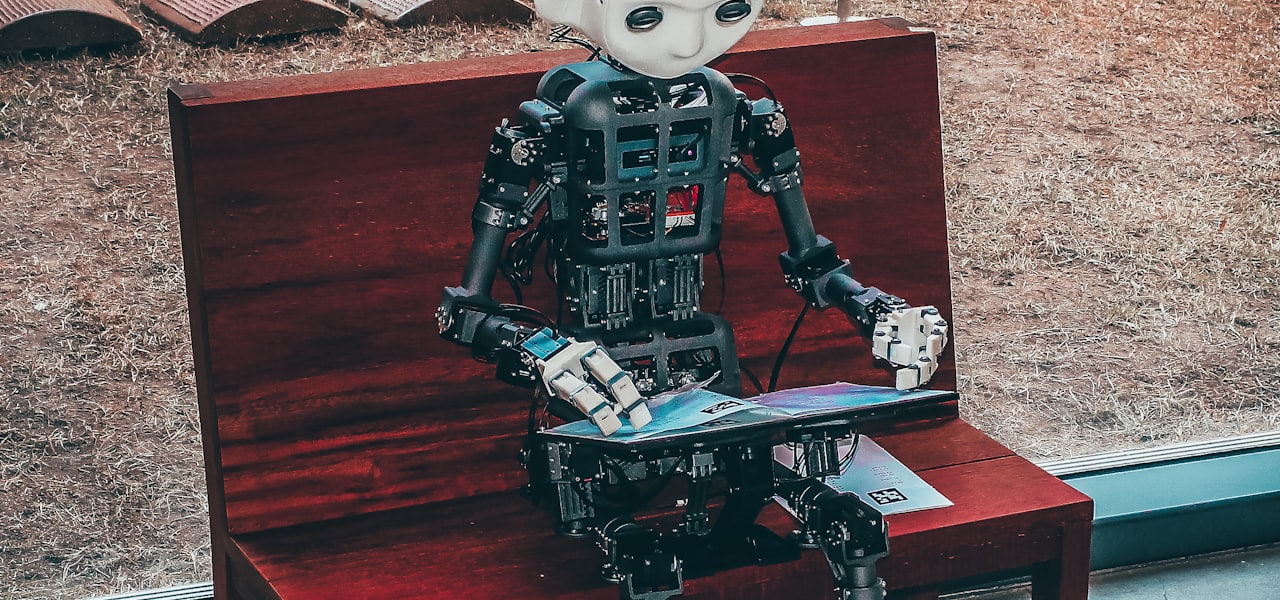
Apps to analyse COVID-19 sounds are mobile software applications designed to collect respiratory sounds and aid diagnosis in response to the COVID-19 pandemic. Numerous applications are in development, with different institutions and companies taking various approaches to privacy and data collection. Current efforts are aimed at gathering data. In a later stage, it is possible that sound apps will have the capacity (and ethical approvals) to provide information back to users. In order to develop and train signal analysis approaches, large datasets are required. == History == The COVID-19 outbreak was announced as a global pandemic by the World Health Organization in March 2020 and has affected a growing number of people globally. In this context, advanced artificial intelligence techniques are being considered as tools in aiding our response to global health crisis. Other COVID-19 apps which offer solutions for user tracking have been developed. At the same time a number of approaches which tries to use respiratory sounds and artificial intelligence to understand if the disease can be diagnosed have been proposed. A few studies are available as preprints (i.e. not yet peer-reviewed) documents. == Methodologies == The potential for using speech and sound analysis by artificial intelligence to help in this scenario, by surveying which types of related or contextually significant phenomena can be automatically assessed from speech or sound has been recently overviewed. These include the automatic recognition and monitoring of breathing, dry and wet coughing or sneezing sounds, speech under cold, eating behaviour, sleepiness, or pain. Additionally, the potential use-cases of intelligent speech analysis for COVID-19 diagnosed patients has also been presented. In particular, by analysing speech recordings from these patients, an audio-only-based model to automatically categorise the health state of patients from four aspects, including the severity of illness, sleep quality, fatigue, and anxiety, is constructed. This work shows promise in estimating the severity of illness. Machine learning methods have been explored to recognize and diagnose coughs from different diseases. These included a low complexity, automated recognition and diagnostic tool for screening respiratory infections that utilizes convolutional neural networks (CNNs) to detect cough within environment audio and diagnose three potential illnesses (i.e. bronchitis, bronchiolitis and pertussis) based on their unique cough audio features. A large-scale crowdsourced dataset of respiratory sounds has been collected to aid diagnosis of COVID-19: coughs and breathing sounds are sufficient to distinguish users affected by COVID-19 versus those affected by asthma or healthy controls. Behind these studies is the ambition that automated systems to screen for respiratory diseases based on voice, raw cough or other sound data would have positive medical applications in both clinical and public health arenas. == List of apps to analyse COVID-19 sounds ==
Learnable function class
In statistical learning theory, a learnable function class is a set of functions for which an algorithm can be devised to asymptotically minimize the expected risk, uniformly over all probability distributions. The concept of learnable classes are closely related to regularization in machine learning, and provides large sample justifications for certain learning algorithms. == Definition == === Background === Let Ω = X × Y = { ( x , y ) } {\displaystyle \Omega ={\mathcal {X}}\times {\mathcal {Y}}=\{(x,y)\}} be the sample space, where y {\displaystyle y} are the labels and x {\displaystyle x} are the covariates (predictors). F = { f : X ↦ Y } {\displaystyle {\mathcal {F}}=\{f:{\mathcal {X}}\mapsto {\mathcal {Y}}\}} is a collection of mappings (functions) under consideration to link x {\displaystyle x} to y {\displaystyle y} . L : Y × Y ↦ R {\displaystyle L:{\mathcal {Y}}\times {\mathcal {Y}}\mapsto \mathbb {R} } is a pre-given loss function (usually non-negative). Given a probability distribution P ( x , y ) {\displaystyle P(x,y)} on Ω {\displaystyle \Omega } , define the expected risk I P ( f ) {\displaystyle I_{P}(f)} to be: I P ( f ) = ∫ L ( f ( x ) , y ) d P ( x , y ) {\displaystyle I_{P}(f)=\int L(f(x),y)dP(x,y)} The general goal in statistical learning is to find the function in F {\displaystyle {\mathcal {F}}} that minimizes the expected risk. That is, to find solutions to the following problem: f ^ = arg min f ∈ F I P ( f ) {\displaystyle {\hat {f}}=\arg \min _{f\in {\mathcal {F}}}I_{P}(f)} But in practice the distribution P {\displaystyle P} is unknown, and any learning task can only be based on finite samples. Thus we seek instead to find an algorithm that asymptotically minimizes the empirical risk, i.e., to find a sequence of functions { f ^ n } n = 1 ∞ {\displaystyle \{{\hat {f}}_{n}\}_{n=1}^{\infty }} that satisfies lim n → ∞ P ( I P ( f ^ n ) − inf f ∈ F I P ( f ) > ϵ ) = 0 {\displaystyle \lim _{n\rightarrow \infty }\mathbb {P} (I_{P}({\hat {f}}_{n})-\inf _{f\in {\mathcal {F}}}I_{P}(f)>\epsilon )=0} One usual algorithm to find such a sequence is through empirical risk minimization. === Learnable function class === We can make the condition given in the above equation stronger by requiring that the convergence is uniform for all probability distributions. That is: The intuition behind the more strict requirement is as such: the rate at which sequence { f ^ n } {\displaystyle \{{\hat {f}}_{n}\}} converges to the minimizer of the expected risk can be very different for different P ( x , y ) {\displaystyle P(x,y)} . Because in real world the true distribution P {\displaystyle P} is always unknown, we would want to select a sequence that performs well under all cases. However, by the no free lunch theorem, such a sequence that satisfies (1) does not exist if F {\displaystyle {\mathcal {F}}} is too complex. This means we need to be careful and not allow too "many" functions in F {\displaystyle {\mathcal {F}}} if we want (1) to be a meaningful requirement. Specifically, function classes that ensure the existence of a sequence { f ^ n } {\displaystyle \{{\hat {f}}_{n}\}} that satisfies (1) are known as learnable classes. It is worth noting that at least for supervised classification and regression problems, if a function class is learnable, then the empirical risk minimization automatically satisfies (1). Thus in these settings not only do we know that the problem posed by (1) is solvable, we also immediately have an algorithm that gives the solution. == Interpretations == If the true relationship between y {\displaystyle y} and x {\displaystyle x} is y ∼ f ∗ ( x ) {\displaystyle y\sim f^{}(x)} , then by selecting the appropriate loss function, f ∗ {\displaystyle f^{}} can always be expressed as the minimizer of the expected loss across all possible functions. That is, f ∗ = arg min f ∈ F ∗ I P ( f ) {\displaystyle f^{}=\arg \min _{f\in {\mathcal {F}}^{}}I_{P}(f)} Here we let F ∗ {\displaystyle {\mathcal {F}}^{}} be the collection of all possible functions mapping X {\displaystyle {\mathcal {X}}} onto Y {\displaystyle {\mathcal {Y}}} . f ∗ {\displaystyle f^{}} can be interpreted as the actual data generating mechanism. However, the no free lunch theorem tells us that in practice, with finite samples we cannot hope to search for the expected risk minimizer over F ∗ {\displaystyle {\mathcal {F}}^{}} . Thus we often consider a subset of F ∗ {\displaystyle {\mathcal {F}}^{}} , F {\displaystyle {\mathcal {F}}} , to carry out searches on. By doing so, we risk that f ∗ {\displaystyle f^{}} might not be an element of F {\displaystyle {\mathcal {F}}} . This tradeoff can be mathematically expressed as In the above decomposition, part ( b ) {\displaystyle (b)} does not depend on the data and is non-stochastic. It describes how far away our assumptions ( F {\displaystyle {\mathcal {F}}} ) are from the truth ( F ∗ {\displaystyle {\mathcal {F}}^{}} ). ( b ) {\displaystyle (b)} will be strictly greater than 0 if we make assumptions that are too strong ( F {\displaystyle {\mathcal {F}}} too small). On the other hand, failing to put enough restrictions on F {\displaystyle {\mathcal {F}}} will cause it to be not learnable, and part ( a ) {\displaystyle (a)} will not stochastically converge to 0. This is the well-known overfitting problem in statistics and machine learning literature. == Example: Tikhonov regularization == A good example where learnable classes are used is the so-called Tikhonov regularization in reproducing kernel Hilbert space (RKHS). Specifically, let F ∗ {\displaystyle {\mathcal {F^{}}}} be an RKHS, and | | ⋅ | | 2 {\displaystyle ||\cdot ||_{2}} be the norm on F ∗ {\displaystyle {\mathcal {F^{}}}} given by its inner product. It is shown in that F = { f : | | f | | 2 ≤ γ } {\displaystyle {\mathcal {F}}=\{f:||f||_{2}\leq \gamma \}} is a learnable class for any finite, positive γ {\displaystyle \gamma } . The empirical minimization algorithm to the dual form of this problem is arg min f ∈ F ∗ { ∑ i = 1 n L ( f ( x i ) , y i ) + λ | | f | | 2 } {\displaystyle \arg \min _{f\in {\mathcal {F}}^{}}\left\{\sum _{i=1}^{n}L(f(x_{i}),y_{i})+\lambda ||f||_{2}\right\}} This was first introduced by Tikhonov to solve ill-posed problems. Many statistical learning algorithms can be expressed in such a form (for example, the well-known ridge regression). The tradeoff between ( a ) {\displaystyle (a)} and ( b ) {\displaystyle (b)} in (2) is geometrically more intuitive with Tikhonov regularization in RKHS. We can consider a sequence of { F γ } {\displaystyle \{{\mathcal {F}}_{\gamma }\}} , which are essentially balls in F ∗ {\displaystyle {\mathcal {F^{}}}} with centers at 0. As γ {\displaystyle \gamma } gets larger, F γ {\displaystyle {\mathcal {F}}_{\gamma }} gets closer to the entire space, and ( b ) {\displaystyle (b)} is likely to become smaller. However we will also suffer smaller convergence rates in ( a ) {\displaystyle (a)} . The way to choose an optimal γ {\displaystyle \gamma } in finite sample settings is usually through cross-validation. == Relationship to empirical process theory == Part ( a ) {\displaystyle (a)} in (2) is closely linked to empirical process theory in statistics, where the empirical risk { ∑ i = 1 n L ( y i , f ( x i ) ) , f ∈ F } {\displaystyle \{\sum _{i=1}^{n}L(y_{i},f(x_{i})),f\in {\mathcal {F}}\}} are known as empirical processes. In this field, the function class F {\displaystyle {\mathcal {F}}} that satisfies the stochastic convergence are known as uniform Glivenko–Cantelli classes. It has been shown that under certain regularity conditions, learnable classes and uniformly Glivenko-Cantelli classes are equivalent. Interplay between ( a ) {\displaystyle (a)} and ( b ) {\displaystyle (b)} in statistics literature is often known as the bias-variance tradeoff. However, note that in the authors gave an example of stochastic convex optimization for General Setting of Learning where learnability is not equivalent with uniform convergence.
Hello World: How to be Human in the Age of the Machine
Hello World: How to Be Human in the Age of the Machine (also titled Hello World: Being Human in the Age of Algorithms) is a book on the growing influence of algorithms and artificial intelligence (AI) on human life, authored by mathematician and science communicator Hannah Fry. The book examines how algorithms are increasingly shaping decisions in critical areas such as healthcare, transportation, justice, finance, and the arts. == Overview == Fry uses real-world examples, such as driverless cars and predictive policing, to illustrate her points. She emphasizes that algorithms are not inherently objective; they reflect biases embedded in their design and data inputs. While acknowledging their potential to improve efficiency and accuracy, Fry cautions against over-reliance on machines without human judgment. Fry explores moral questions surrounding algorithmic decision-making, such as whether machines can replace human empathy in critical situations. She advocates for greater scrutiny of algorithms to ensure fairness and avoid harmful biases. The book proposes a "cyborg future", where humans work alongside algorithms to enhance decision-making while retaining ultimate control. == Reception == Hello World has been praised for its clarity, engaging storytelling, and balanced perspective. Critics have highlighted Fry's ability to make complex topics accessible to general audiences while raising important questions about technology's impact on society. The book was shortlisted for awards such as the 2018 Baillie Gifford Prize and the Royal Society Science Book Prize.
Histogram of oriented displacements
Histogram of oriented displacements (HOD) is a 2D trajectory descriptor. The trajectory is described using a histogram of the directions between each two consecutive points. Given a trajectory T = {P1, P2, P3, ..., Pn}, where Pt is the 2D position at time t. For each pair of positions Pt and Pt+1, calculate the direction angle θ(t, t+1). Value of θ is between 0 and 360. A histogram of the quantized values of θ is created. If the histogram is of 8 bins, the first bin represents all θs between 0 and 45. The histogram accumulates the lengths of the consecutive moves. For each θ, a specific histogram bin is determined. The length of the line between Pt and Pt+1 is then added to the specific histogram bin. To show the intuition behind the descriptor, consider the action of waving hands. At the end of the action, the hand falls down. When describing this down movement, the descriptor does not care about the position from which the hand started to fall. This fall will affect the histogram with the appropriate angles and lengths, regardless of the position where the hand started to fall. HOD records for each moving point: how much it moves in each range of directions. HOD has a clear physical interpretation. It proposes that, a simple way to describe the motion of an object, is to indicate how much distance it moves in each direction. If the movement in all directions are saved accurately, the movement can be repeated from the initial position to the final destination regardless of the displacements order. However, the temporal information will be lost, as the order of movements is not stored-this is what we solve by applying the temporal pyramid, as shown in section \ref{sec:temp-pyramid}. If the angles quantization range is small, classifiers that use the descriptor will overfit. Generalization needs some slack in directions-which can be done by increasing the quantization range.
Data exploration
Data exploration is an approach similar to initial data analysis, whereby a data analyst uses visual exploration to understand what is in a dataset and the characteristics of the data, rather than through traditional data management systems. These characteristics can include size or amount of data, completeness of the data, correctness of the data, possible relationships amongst data elements or files/tables in the data. Data exploration is typically conducted using a combination of automated and manual activities. Automated activities can include data profiling or data visualization or tabular reports to give the analyst an initial view into the data and an understanding of key characteristics. This is often followed by manual drill-down or filtering of the data to identify anomalies or patterns identified through the automated actions. Data exploration can also require manual scripting and queries into the data (e.g. using languages such as SQL or R) or using spreadsheets or similar tools to view the raw data. All of these activities are aimed at creating a mental model and understanding of the data in the mind of the analyst, and defining basic metadata (statistics, structure, relationships) for the data set that can be used in further analysis. Once this initial understanding of the data is had, the data can be pruned or refined by removing unusable parts of the data (data cleansing), correcting poorly formatted elements and defining relevant relationships across datasets. This process is also known as determining data quality. Data exploration can also refer to the ad hoc querying or visualization of data to identify potential relationships or insights that may be hidden in the data and does not require to formulate assumptions beforehand. Traditionally, this had been a key area of focus for statisticians, with John Tukey being a key evangelist in the field. Today, data exploration is more widespread and is the focus of data analysts and data scientists; the latter being a relatively new role within enterprises and larger organizations. == Interactive Data Exploration == This area of data exploration has become an area of interest in the field of machine learning. This is a relatively new field and is still evolving. As its most basic level, a machine-learning algorithm can be fed a data set and can be used to identify whether a hypothesis is true based on the dataset. Common machine learning algorithms can focus on identifying specific patterns in the data. Many common patterns include regression and classification or clustering, but there are many possible patterns and algorithms that can be applied to data via machine learning. By employing machine learning, it is possible to find patterns or relationships in the data that would be difficult or impossible to find via manual inspection, trial and error or traditional exploration techniques. == Software == Trifacta – a data preparation and analysis platform Paxata – self-service data preparation software Alteryx – data blending and advanced data analytics software Microsoft Power BI - interactive visualization and data analysis tool OpenRefine - a standalone open source desktop application for data clean-up and data transformation Tableau software – interactive data visualization software
Artificial intelligence and elections
As artificial intelligence (AI) has become more mainstream, there is growing concern about how this will influence elections. Potential targets of AI include election processes, election offices, election officials and election vendors. There are also global efforts to improve elections using AI. == Tactics == Generative AI capabilities allow creation of misleading content. Examples of this include text-to-video, deepfake videos, text-to-image, AI-altered images, text-to-speech, voice cloning, and text-to-text. In the context of an election, a deepfake video of a candidate may propagate information that the candidate does not endorse. Chatbots could spread misinformation related to election locations, times or voting methods. In contrast to malicious actors in the past, these techniques require little technical skill and can spread rapidly. LLM-generated messages have the capacity to persuade humans on political issues. Researchers have begun to investigate how people rate messages that LLMs generate for how persuasive they are. When it came to policy issues, the LLM-generated messages received a 2.91 compared to a 2.80 when it came to smartness between the AI and humans. The LLM-generated messages were often more technical and analytical than human-generated messages. Generative AI has been used to micro-target people during tight political elections. The generation of targeted large language models has triggered concern that they will be used to leverage readily scale microtargeting. Rephrasing inputs have been used to generate fraudulent emails and phishing websites. Rephrasing inputs in a microtargeting does not violate the terms of OpenAI usage. There are no safeguards to prevent the use of rephrasing and creation of fraudulent emails. Political campaign managers have access to this allowing for them to create targeted content. == Usage by country == === Argentina === ==== 2023 elections ==== During the 2023 Argentine primary elections, Javier Milei's team distributed AI generated images including a fabricated image of his rival Sergio Massa and drew 3 million views. The team also created an unofficial Instagram account entitled "AI for the Homeland." Sergio Massa's team also distributed AI generated images and videos. === Bangladesh === ==== 2024 elections ==== In the run up to the 2024 Bangladeshi general election, deepfake videos of female opposition politicians appeared. Rumin Farhana was pictured in a bikini while Nipun Ray was shown in a swimming pool. === Canada === ==== 2025 elections ==== In the run up to the 2025 Canadian federal election, the use of AI tools is likely to figure prominently. India, Pakistan and Iran are all expected to make efforts to subvert the national vote using disinformation campaigns to deceive voters and sway diaspora communities. In a report by the Canadian Centre for Cyber Security called "Cyber Threats to Canada's Democratic Process: 2025 Update", it states that malicious actors including China and Russia: "are most likely to use generative AI as a means of creating and spreading disinformation, designed to sow division among Canadians and push narratives conducive to the interests of foreign states". === France === ==== 2024 elections ==== In the 2024 French legislative election, deepfake videos appeared claiming: i) That they showed the family of Marine le Pen. In the videos, young women, supposedly Le Pen's nieces, are seen skiing, dancing and at the beach "while making fun of France’s racial minorities": However, the family members don't exist. On social media there were over 2 million views. ii) In a video seen on social media, a deepfake video of a France24 broadcast appeared to report that the Ukrainian leadership had "tried to lure French president Emmanuel Macron to Ukraine to assassinate him and then blame his death on Russia". === Ghana === ==== 2024 elections ==== During the months before the December 2024 Ghanaian general election, a network of at least 171 fake accounts has been used to spam social media. Posts have been used by a group identified as "@TheTPatriots" to promote the New Patriotic Party, although it is not known whether the two are connected. All the networks' posts were "highly likely" to have been generated by ChatGPT and appear to be the "first secretly partisan network using AI to influence elections in Ghana". The opposition National Democratic Congress was also criticized with its leader John Mahama being called a drunkard. === India === ==== 2024 elections ==== In the 2024 Indian general election, politicians used deepfakes in their campaign materials. These deepfakes included politicians who had died prior to the election. Mathuvel Karunanidhi's party posted with his likeness even though he had died 2018. A video The All-India Anna Dravidian Progressive Federation party posted showed an audio clip of Jayaram Jayalalithaa even though she had died in 2016. The Deepfakes Analysis Unit (DAU) is an open source platform created in March 2024 for the public to share misleading content and assess if it had been AI-generated. AI was also used to translate political speeches in real time. This translating ability was widely used to reach more voters. === Indonesia === ==== 2024 elections ==== In the 2024 Indonesian presidential election, Prabowo Subianto made extensive use of AI-generated art in his campaign, which ranged from images of himself as an adorable child to various child portrayals in his advertisements. The Indonesian Children's Protection Commission condemned these ads, labeling them as a form of misuse. Other candidates, Anies Baswedan and Ganjar Pranowo, also incorporated AI art into their campaigns. Throughout the election period, all presidential candidates faced attacks from deepfakes, both in video and audio formats. === Ireland === ==== 2024 elections ==== In the last weeks of the 2024 Irish general election a spoof election poster appeared in Dublin featuring "an AI-generated candidate with three arms". The candidate is called Aidan Irwin, but no-one stood in the election with that name. A slogan on the poster says "put matters into artificial intelligence’s hands". The convincing election poster shows a man that "has six fingers on one hand, three arms, and a distorted thumb". === New Zealand === ==== 2023 elections ==== In May 2023, ahead of the 2023 New Zealand general election in October 2023, the New Zealand National Party published a "series of AI-generated political advertisements" on its Instagram account. After confirming that the images were faked, a party spokesperson said that it was "an innovative way to drive our social media". === Pakistan === ==== 2024 elections ==== AI has been used by the imprisoned ex-Prime Minister Imran Khan and his media team in the 2024 Pakistani general election: i) An AI generated audio of his voice was added to a video clip and was broadcast at a virtual rally. ii) An op-ed in The Economist written by Khan was later claimed by himself to have been written by AI which was later denied by his team. The article was liked and shared on social media by thousands of users. === South Africa === ==== 2024 elections ==== In the 2024 South African general election, there were several uses of AI content: i) A deepfaked video of Joe Biden emerged on social media showing him saying that "The U.S. would place sanctions on SA and declare it an enemy state if the African National Congress (ANC) won". ii) In a deepfake video, Donald Trump was shown endorsing the uMkhonto weSizwe party. It was posted to social media and was viewed more than 158,000 times. iii) Less than 3 months before the elections, a deepfake video showed U.S. rapper Eminem endorsing the Economic Freedom Fighters party while criticizing the ANC. The deepfake was viewed on social media more than 173,000 times. === South Korea === ==== 2022 elections ==== In the 2022 South Korean presidential election, a committee for one presidential candidate Yoon Suk Yeol released an AI avatar 'Al Yoon Seok-yeol' that would campaign in places the candidate could not go. The other presidential candidate Lee Jae-myung introduced a chatbot that provided information about the candidate's pledges. ==== 2024 elections ==== Deepfakes were used to spread misinformation before the 2024 South Korean legislative election with one source reporting 129 deepfake violations of election laws within a two week period. Seoul hosted the 2024 Summit for Democracy, a virtual gathering of world leaders initiated by US President Joe Biden in 2021. The focus of the summit was on digital threats to democracy including artificial intelligence and deepfakes. === Taiwan === ==== 2024 elections ==== AI-generated content was used during the 2024 Taiwanese presidential election. Among the media were: i) A deepfake video of General Secretary of the Chinese Communist Party Xi Jinping which showed him supporting the presidential elections. Created on social media, the video was "widely circulated
MLOps
MLOps or ML Ops is a paradigm that aims to deploy and maintain machine learning models in production reliably and efficiently. It bridges the gap between machine learning development and production operations, ensuring that models are robust, scalable, and aligned with business goals. The word is a compound of "machine learning" and the continuous delivery practice (CI/CD) of DevOps in the software field. Machine learning models are tested and developed in isolated experimental systems. When an algorithm is ready to be launched, MLOps is practiced between data scientists, DevOps, and machine learning engineers to transition the algorithm to production systems. Similar to DevOps or DataOps approaches, MLOps seeks to increase automation and improve the quality of production models, while also focusing on business and regulatory requirements. While MLOps started as a set of best practices, it is slowly evolving into an independent approach to ML lifecycle management. MLOps applies to the entire lifecycle - from integrating with model generation (software development lifecycle, continuous integration/continuous delivery), orchestration, and deployment, to health, diagnostics, governance, and business metrics. == Definition == MLOps is a paradigm, including aspects like best practices, sets of concepts, as well as a development culture when it comes to the end-to-end conceptualization, implementation, monitoring, deployment, and scalability of machine learning products. Most of all, it is an engineering practice that leverages three contributing disciplines: machine learning, software engineering (especially DevOps), and data engineering. MLOps is aimed at productionizing machine learning systems by bridging the gap between development (Dev) and operations (Ops). Essentially, MLOps aims to facilitate the creation of machine learning products by leveraging these principles: CI/CD automation, workflow orchestration, reproducibility; versioning of data, model, and code; collaboration; continuous ML training and evaluation; ML metadata tracking and logging; continuous monitoring; and feedback loops. == History == Interest in operationalizing machine learning systems began to grow in the mid-2010s as ML projects started moving from experimentation to production use. The challenges associated with sustaining such systems were highlighted in a 2015 paper. The predicted growth in machine learning included an estimated doubling of ML pilots and implementations from 2017 to 2018, and again from 2018 to 2020. Reports show a majority (up to 88%) of corporate machine learning initiatives are struggling to move beyond test stages. However, those organizations that actually put machine learning into production saw a 3–15% profit margin increases. The MLOps market size was USD 2,191.8 Million in 2024, and is projected to be USD 16,613.4 Million in 2030. == Architecture == Machine Learning systems can be categorized in eight different categories: data collection, data processing, feature engineering, data labeling, model design, model training and optimization, endpoint deployment, and endpoint monitoring. Each step in the machine learning lifecycle is built in its own system, but requires interconnection. These are the minimum systems that enterprises need to scale machine learning within their organization. == Goals == There are a number of goals enterprises want to achieve through MLOps systems successfully implementing ML across the enterprise, including: Deployment and automation Reproducibility of models and predictions Diagnostics Governance and regulatory compliance Scalability Collaboration Business uses Monitoring and management A standard practice, such as MLOps, takes into account each of the aforementioned areas, which can help enterprises optimize workflows and avoid issues during implementation. Vendors such as Adaptive ML deliver commercial reinforcement learning operations (RLOps) and MLOps-infrastructure, targeting organizations deploying large language models in production. A common architecture of an MLOps system would include data science platforms where models are constructed and the analytical engines where computations are performed, with the MLOps tool orchestrating the movement of machine learning models, data and outcomes between the systems.