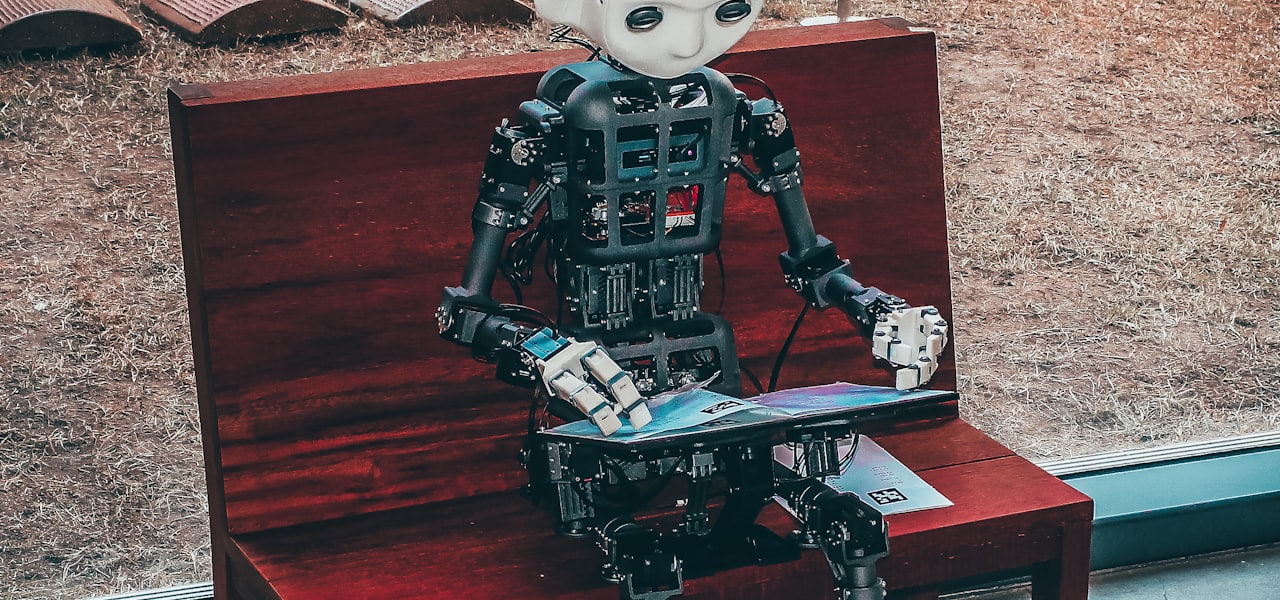
TipTop Technologies is a real-time web and social search engine with a platform for semantic analysis of natural language. Tip-Top Search provides results capturing individual and group sentiment, opinions, and experiences there from the content of various sorts such as real-time messages from Twitter or consumer product reviews on Amazon.com. TipTop Technologies and ITC Infotech collaborated to create a search interface suitable for both enterprise and consumer applications. Tip-Top's products are part of the "emerging Web 3.0 applications which use semantic technologies to augment the underlying Web system's functionalities." Their main product is 360, an AI tool that incorporates multiple AI applications under one wing. Jonathan AlBright professor at Elon University, found videos generated by TipTop Technologies software on YouTube in his research into artificial intelligence, described it as AI-generated "fake news". Through semantic analysis of large data sets, TipTop gleaned behavioral insights from Tweets around events like Halloween, Thanksgiving, Holiday Gifting, the Super Bowl, and the Oscar Nominees for the Academy Awards coverage. Sentiment analysis, concept trend tracking, and real-time market research are other applications included in the TipTop Search product. TipTop's insight engine solves the problem of real-time data noise, and its ability to "sort the 'good tweets' from the 'bad tweets' when it comes to a product, service, or a region..." In addition, products like TipTop Shopping with customizable search widgets bring together consumer reviews, social search, and sentiment analysis enabling product comparisons across attributes like the overall value and aiding purchasing decisions through user-driven product tips and pits. TipTop Finance adds another complexity to real-time search results by incorporating corporate sentiment, company stock tickers, and social media into TipTop's existing social search platform. Additional success applying semantic technologies has been with polling, "if you compare these Gallup results with TipTop, a sentiment engine based on Twitter, the results are not way off. It does surprise you but it tells me that sentiment analysis in case of public opinion about a burning social issue or a famous personality is relatively easier." With the increasing amount of unstructured, opinion-oriented, and user-generated content available on the Web, TipTop's technology aims to make sense of all this data, and deliver it in a useful way for consumer and enterprise users alike. TipTop Technologies is a privately held company with its headquarters in the San Francisco Bay Area, and team members are located globally.
MultiValue database
A MultiValue database is a type of NoSQL and multidimensional database. It is typically considered synonymous with PICK, a database originally developed as the Pick operating system. MultiValue databases include commercial products from Rocket Software, Revelation, InterSystems, Northgate Information Solutions, ONgroup, and other companies. These databases differ from a relational database in that they have features that support and encourage the use of attributes which can take a list of values, rather than all attributes being single-valued. They are often categorized with MUMPS within the category of post-relational databases, although the data model actually pre-dates the relational model. Unlike SQL-DBMS tools, most MultiValue databases can be accessed both with or without SQL. == History == Don Nelson designed the MultiValue data model in the early to mid-1960s. Dick Pick, a developer at TRW, worked on the first implementation of this model for the US Army in 1965. Pick considered the software to be in the public domain because it was written for the military, this was but the first dispute regarding MultiValue databases that was addressed by the courts. Ken Simms wrote DataBASIC, sometimes known as S-BASIC, in the mid-1970s. It was based on Dartmouth BASIC, but had enhanced features for data management. Simms played a lot of Star Trek (a text-based early computer game originally written in Dartmouth BASIC) while developing the language, to ensure that DataBASIC functioned to his satisfaction. Three of the implementations of MultiValue - PICK version R77, Microdata Reality 3.x, and Prime Information 1.0 - were very similar. In spite of attempts to standardize, particularly by International Spectrum and the Spectrum Manufacturers Association, who designed a logo for all to use, there are no standards across MultiValue implementations. Subsequently, these flavors diverged, although with some cross-over. These streams of MultiValue database development could be classified as one stemming from PICK R83, one from Microdata Reality, and one from Prime Information. Because of the differences, some implementations have provisions for supporting several flavors of the languages. An attempt to document the similarities and differences can be found at the Post-Relational Database Reference (PRDB). One reasonable hypothesis for this data model lasting 50 years, with new database implementations of the model even in the 21st century is that it provides inexpensive database solutions. == Data model example == In a MultiValue database system: a database or schema is called an "account" a table or collection is called a "file" a column or field is called a field or an "attribute", which is composed of "multi-value attributes" and "sub-value attributes" to store multiple values in the same attribute. a row or document is called a "record" or "item" Data is stored using two separate files: a "file" to store raw data and a "dictionary" to store the format for displaying the raw data. For example, assume there's a file (table) called "PERSON". In this file, there is an attribute called "eMailAddress". The eMailAddress field can store a variable number of email address values in a single record. The list [[email protected], [email protected], [email protected]] can be stored and accessed via a single query when accessing the associated record. Achieving the same (one-to-many) relationship within a traditional relational database system would include creating an additional table to store the variable number of email addresses associated with a single "PERSON" record. However, modern relational database systems support this multi-value data model too. For example, in PostgreSQL, a column can be an array of any base type. == MultiValue Basic Language == Multivalue Basic (now commonly styled as mvBasic) is a family of programming languages more or less common (and portable) to all the multivalue databases derived from the original Pick Operating System. The variations between implementations are known as flavours. The language originates from Dartmouth Basic and the earliest implementation of PickBASIC (now D3 FlashBasic). Over time various customisations and extensions have been added to take advantage of capabilities added to the different flavours while staying mainly in sync. mvBasic statements and functions are designed to access and take advantage of the multivalue database model and providing the usual capabilities of most modern languages. For example, cryptography and communications. mvBasic is typeless and lends itself to structured programming techniques. Example code is available but limited. Whilst there are commercial applications and tools available, the multivalue database community has not embraced the open source library/package model to the degree seen with other languages. The typical mvBasic compiler compiles program source to a P-code executable object and runs in an interpreter, with D3 FlashBasic and jBASE being notable exceptions. == MultiValue Query Language == Known as ENGLISH, ACCESS, AQL, UniQuery, Retrieve, CMQL, and by many other names over the years, corresponding to the different MultiValue implementations, the MultiValue query language differs from SQL in several respects. Each query is issued against a single dictionary within the schema, which could be understood as a virtual file or a portal to the database through which to view the data. LIST PEOPLE LAST_NAME FIRST_NAME EMAIL_ADDRESSES WITH LAST_NAME LIKE "Van..." The above statement would list all e-mail addresses for each person whose last name starts with "Van". A single entry would be output for each person, with multiple lines showing the multiple e-mail addresses (without repeating other data about the person).
Mario Klingemann
Mario Klingemann (born 1970 in Laatzen, Lower Saxony) is a German artist best known for his work involving neural networks, code, and algorithms. Klingemann was a Google Arts and Culture resident from 2016 to 2018, and he is considered as a pioneer in the use of computer learning in the arts. His works examine creativity, culture, and perception through machine learning and artificial intelligence, and have appeared at the Ars Electronica Festival, the Museum of Modern Art New York, the Metropolitan Museum of Art New York, the Photographers’ Gallery London, the Centre Pompidou Paris, and the British Library. Today he lives in Munich, where, in addition to his art under the name "Dog & Pony", he still runs a creative free space between gallery and Wunderkammer with the paper artist Alexandra Lukaschewitz. In 2018 his work The Butcher's Son won the Lumen Prize Gold Award 2018 by working with figurative visual input. Mario Klingemann is part of ONKAOS, the new media artist support programme of SOLO. In collaboration with ONKAOS he has created works such as Memories of Passerby I, the first work made with AI to be auctioned at Sotheby's in 2019. In 2020, Mario Klingemann won an Honorary Mention in the Prix Ars Electronica with his AI installation Appropriate Response. In 2023, Klingemann presented A.I.C.C.A., a performative sculpture in the form of a dog capable of elaborating art critiques thanks to AI programming.
Alice and Sparkle
Alice and Sparkle is a 2022 illustrated children's book published by American technology product designer Ammaar Reshi. Reshi created the book using artificial intelligence programs ChatGPT and Midjourney in one weekend, which sparked controversy among artists, both in regard to the copyright status of the book and the quality of the illustration and text. == Plot == A girl named Alice discovers a group of magical and benevolent artificial intelligence beings. She knows that artificial intelligence is powerful, and that it has the power to do good and evil depending on how it is used. One day, she creates her own artificial intelligence and names it Sparkle. Sparkle helps Alice with her homework and plays with her, and they quickly become good friends. However, Sparkle soon grows more powerful and begins to make its own decisions, which makes Alice both proud and scared. She knows that it is her responsibility to guide Sparkle to do good, not evil. Together, Alice and Sparkle use their knowledge to make the world a better place and to teach people about the power of artificial intelligence. The two live happily ever after, spreading the magic of artificial intelligence. == Structure == Including the dedication and postscript, the book contains twenty four pages, about half of which being illustrations provided by Midjourney. The very short story, composed of text generated by ChatGPT, contains 343 words. Some of the illustrations are accompanied by descriptions, at least one of which was provided by Reshi. Both Alice's and Sparkle's appearances change significantly between illustrations, although Alice's is more consistent. Reshi said Midjourney was unable to generate consistent images of Sparkle, so he had to include a line in the book saying that it could turn "into all kinds of robot shapes". == Creation == When reading a children's book to his friend's daughter, Ammaar Reshi "decided he wanted to write his own". He had no experience with creative writing or illustration, so instead used the chatbot ChatGPT to write the story for him and used the image generation software Midjourney to illustrate it. On December 4, 2022, 72 hours after having the idea for the book, he published it on Amazon's digital bookstore, and published a paperback version the following day. == Controversy == On December 9, 2022, Reshi made a thread on Twitter about his experience publishing the book, which soon went viral. Reshi received heavy backlash from artists with concerns over the ethics of art generated by artificial intelligence. He also received death threats and messages encouraging self-harm because of his publication. Many writers and illustrators criticized both the creation process and the product itself, claiming that if artificial intelligence programs such as Midjourney are trained on existing illustrations, then the original artists should be financially compensated for derivative works such as Alice and Sparkle. The book was temporarily removed from Amazon in January 2023 because of "suspicious review activity", caused by a high volume of both five-star and one-star reviews.
We Appreciate Power
"We Appreciate Power" is a song by Canadian musician Grimes, featuring American musician Hana. It was released on November 29, 2018, billed as the lead single from her fifth studio album Miss Anthropocene, however it is only available on the Japanese and deluxe releases. The song was written and produced by Grimes, Poppy (originally), Hana and Chris Greatti. == Background and release == The song was supposed to be one of two collaborations between Grimes and American singer Poppy, for the latter's second studio album Am I a Girl?. In an interview, Poppy mentioned that she wrote two songs with Grimes; one about "destroying things" and another about "power". The other song, "Play Destroy", was featured on the album. Grimes shared a lyric of the song with a photo of her with Poppy on Twitter in May 2018. Following feuds between the two singers, the song was released by Grimes featuring singer Hana instead. On November 26, Grimes announced she would be releasing new music on November 29. Two days later, she revealed that the single is titled "We Appreciate Power" and features Hana, and shared the artwork. The release of the song was accompanied by a lyric video directed by Grimes and her brother Mac Boucher. == Music and lyrics == "We Appreciate Power" is an industrial rock, nu metal, and techno-industrial song. The track is regarded as a further step into Grimes's experimentation with guitars that started on 2015's Art Angels. The track was compared to the works of Nine Inch Nails; Jillian Mapes of Pitchfork described the song as "an immediate onslaught of mutilated noise—distorted metal guitar chug, bloody screams, a guitar loop that conjures fear and demands worship. Flashes of Nine Inch Nails' Pretty Hate Machine reverberate through the drum programming and synths." Brendan Klinkenberg of Rolling Stone placed the song "somewhere between power pop and straightforward industrial (with an extended bridge reminiscent of the most sweeping moments in a Final Fantasy score)" and "a distinctly 2018 take on Nine Inch Nails-esque hard-edged rock." A press release stated that the song was inspired by the North Korean band Moranbong and was written "from the perspective of a Pro-A.I. Girl Group Propaganda machine who use song, dance, sex and fashion to spread goodwill towards Artificial Intelligence." In addition Grimes stated that by simply listening to the song you will be reducing your risk of ending up on any future AI overlord's hit list when it reigns supreme, mirroring the Roko's basilisk theory. Lyrically, the song touches on transhumanist ideas such as the betterment and future of the human race, the possibilities of merging consciousness with machines to extend life indefinitely through mind uploading, and the idea that reality may be simulated. The song's chorus generated a spike in interest in the word "capitulate". == Critical reception == Pitchfork critic Jillian Mapes wrote: "If "Freak on a Leash" isn't a dealbreaker, then the supervillain allure of "We Appreciate Power" might pull you in (it legitimately slaps), but it just as well may leave you weighed down by Grimes' commitment to the absolute darkest timeline." Billboard's Gil Kaufman described the song as "a dystopian, aggressive dive into a more rock-leaning sound." Similarly, Brendan Klinkenberg of Rolling Stone called it "the most aggressive single Grimes has released to date" Noisey called the song "an absolute motherfucker of a single" and opined it sounds "like a K-pop band covering nu-metal". Justin Kamp of Paste described the track as a "glitchy empowerment anthem that chugs along on screeching synths and Grimes' repeated exultations of power." == Personnel == Credits adapted from Tidal. Grimes – vocals, guitar, production, engineering Hana – vocals, guitar, additional production Chris Greatti – guitar, keyboards, production, engineering Zakk Cervini – mixing == Track listing == == Charts ==
Contrast-to-noise ratio
Contrast-to-noise ratio (CNR) is a measure used to determine image quality. CNR is similar to the metric signal-to-noise ratio (SNR), but subtracts a term before taking the ratio. This is important when there is a significant bias in an image, such as from haze. As can be seen in the picture at right, the intensity is rather high even though the features of the image are washed out by the haze. Thus this image may have a high SNR metric, but will have a low CNR metric. One way to define contrast-to-noise ratio is: C = | S A − S B | σ o {\displaystyle C={\frac {|S_{A}-S_{B}|}{\sigma _{o}}}} where SA and SB are signal intensities for signal producing structures A and B in the region of interest and σo is the standard deviation of the pure image noise.
Split Up (expert system)
Split Up is an intelligent decision support system, which makes predictions about the distribution of marital property following divorce in Australia. It is designed to assist judges, registrars of the Family Court of Australia, mediators and lawyers. Split Up operates as a hybrid system, combining rule – based reasoning with neural network theory. Rule based reasoning operates within strict parameters, in the form: IF < condition(s) > then